
Wood surfaces and furniture add warmth and character to any space, but they also require the right care to maintain their natural beauty. Dust buildup, moisture exposure, tough stains, and harsh cleaning products can dull finishes, leave streaks, or even cause long-term damage. Using effective cleaning tips for wood surfaces and furniture helps preserve both appearance and durability.
Not all wood is treated the same, and understanding the difference between sealed, polished, or unfinished surfaces is essential before choosing a cleaning method. Gentle techniques and appropriate products can remove grime without stripping protective finishes or altering color.
With consistent maintenance and the right approach, you can keep tables, cabinets, floors, and décor looking polished while extending the life of your wood furnishings for years to come.
Safe Cleaning Methods for Wood Surfaces
What Are the Best Techniques to Clean Wood Furniture Safely?

Cleaning wood furniture safely comes down to two priorities: protecting the finish and keeping moisture under control. When you treat wood surfaces gently and consistently, they stay smoother, look better over time, and are far less likely to develop dull patches or water marks.
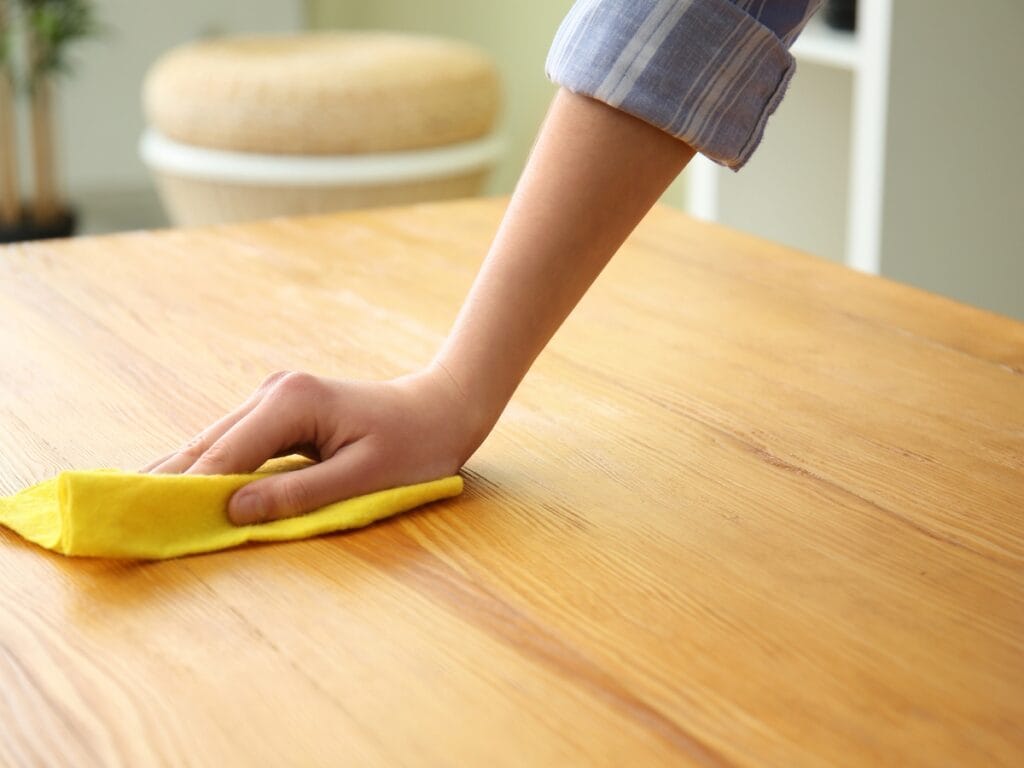
Start with regular dusting. A clean microfiber cloth works well because it lifts and traps dust instead of dragging it across the finish. Dust might seem harmless, but it can act like fine grit, especially on darker stains, and over time it can leave faint scratching that makes a piece look tired.
Spills are the other big issue. When something lands on wood, blot it right away with a soft cloth instead of wiping aggressively. Wiping can spread liquid and push it into seams or edges, where it can swell the wood or cloud the finish. After blotting, follow with a barely damp cloth if needed, then dry the area immediately so moisture does not linger.
It also helps to be picky about what you use. Harsh chemicals, abrasive powders, and solvent-heavy cleaners can strip or soften finishes. Even common multi-surface sprays can leave residue that attracts dust and makes wood look hazy. If you are not sure whether a product is safe, choose something designed for finished wood or stick with a mild solution you can control.
How To Clean Wood Furniture Without Causing Damage
A safe routine is simple, and it works for most finished wood furniture. Start by removing dust with a dry microfiber cloth. Once the surface is free of loose debris, use a soft cloth that is lightly damp, not wet. The goal is to lift smudges without soaking the wood. If your cloth can drip, it is too wet.
For everyday grime, a small amount of mild soap in water is usually enough. Dip the cloth into the solution, wring it out well, and clean with the grain of the wood. Then do a second pass with a clean, damp cloth to remove any leftover soap, and finish by drying right away. That final dry step matters because even a little standing moisture can leave marks, especially on older finishes.
For sticky spots or fingerprints that do not budge, avoid scrubbing hard. Instead, keep the cloth moving gently and give the cleaner a moment to work.
If a stain is stubborn, test any stronger approach in a hidden area first, like the underside of a table edge, so you do not accidentally dull the finish on a visible spot. This kind of careful testing helps you clean wood surfaces effectively without trading cleanliness for damage.
Which Natural Wood Cleaning Products Are Recommended?
Natural options can be great for finished furniture, as long as they are used thoughtfully. The key is remembering that “natural” does not automatically mean “safe for every finish.” Some ingredients can still etch, haze, or leave buildup if used the wrong way.
A diluted vinegar solution is one popular choice, but it needs to stay mild. A small amount of vinegar in water can help cut through grime, yet vinegar used straight can be too harsh for many finishes.
If you go this route, use a gentle dilution, apply it with a well-wrung cloth, and dry immediately. Some people add a small amount of olive oil, which can boost shine, but use it sparingly because oils can leave residue that attracts dust and may create a slightly tacky feel over time.
Beeswax-based products are another solid option when you want a bit of protection and a richer look. They can add a soft sheen and help reduce the appearance of minor dryness. Apply a thin layer, buff it well, and do not overdo it. Too much wax can build up and make the surface look cloudy.
If you prefer DIY eco-friendly cleaners, keep them simple and gentle, and avoid anything abrasive. The safest natural approach is usually minimal moisture, a soft cloth, and light pressure. Over time, that consistency is what keeps wood surfaces looking clean and well cared for without wearing down the finish.
How To Choose And Apply The Best Wood Furniture Polish
Wood polish can be helpful, but only when it matches the piece and is used with a light hand. A good polish should improve how the finish looks while adding a small layer of protection, not leave a greasy film or create buildup that attracts dust. Before you buy anything, it helps to consider what you are actually trying to fix.
If the surface looks dry or slightly dull but is otherwise in good shape, a gentle polish can refresh it. If the finish is already shiny and clean, polishing may not add much and can even make wood surfaces look cloudy over time.
Start by thinking about the type of wood and the finish, since polish interacts with the finish more than the wood itself. Most modern furniture has a sealed finish, which means you are polishing the protective coating, not soaking product into raw wood.
Older pieces may have a thinner finish or areas where the seal is worn, so they can react more strongly to oils and waxes. If you are unsure, test any product on a hidden spot and check it after it dries, not while it is still wet.
When it comes to application, prep matters as much as the polish you choose. Dust first with a microfiber cloth so you are not rubbing grit into the finish. If there is sticky residue, clean it gently with a slightly damp cloth and let the surface dry fully before polishing.
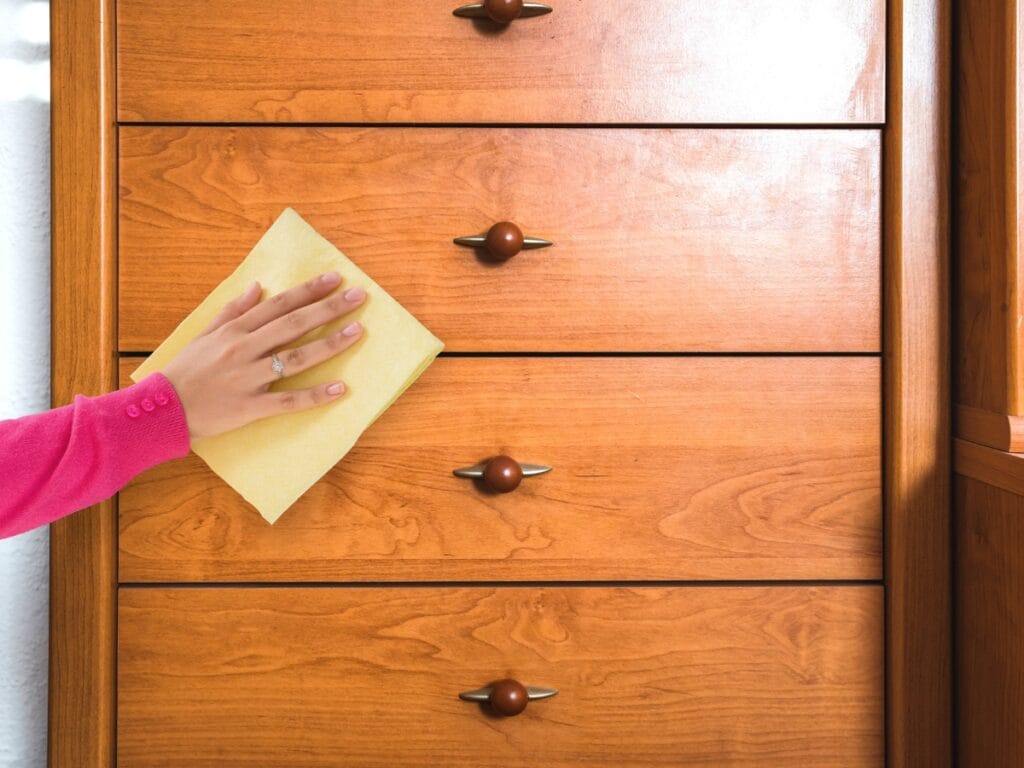
Apply a small amount of product to a soft cloth rather than pouring it directly onto the furniture. Work with the grain using light pressure, then buff with a clean cloth to remove excess. This step is what keeps polish from sitting on top of the finish and turning into a tacky layer.
What Types Of Wood Polish Improve Surface Appearance?
Polishes generally fall into a few categories, and each one can be useful in the right situation. Oil-based polishes are often chosen because they can make a piece look richer right away.
On sealed furniture, that effect is mostly cosmetic since the oil does not truly penetrate like it would on unfinished wood. The downside is that oils can leave residue if too much is used, and that residue can collect dust and make wood surfaces feel slightly sticky.
Water-based polishes tend to dry faster and usually leave less odor. They can be a good option if you want a quick refresh without a heavy feel. They also tend to be easier to buff evenly, which matters if you are trying to avoid streaks. For households that clean frequently, a water-based option can fit better into a simple routine.
Wax polishes, including beeswax and carnauba wax blends, can add a smooth sheen and a bit of protection. They are especially popular for pieces that look flat or slightly worn, because they can soften the look of minor scuffs.
Wax does require careful buffing and restraint. Too much wax can build up in corners, around decorative trim, or near hardware, leaving a dull haze that is hard to remove.
One thing to watch for is silicone in some polishes. Silicone can create a quick shine, but it may complicate future refinishing or touch-ups. If you are caring for older furniture or anything you might restore later, it is usually safer to choose a product that is clear about its ingredients and avoids heavy silicone additives.
How Often Should Wood Furniture Be Polished For Optimal Maintenance?
Polishing is not something most furniture needs every week. In many homes, polishing a few times a year is enough, especially if you dust regularly and clean spills quickly. A good general rhythm is polishing every few months for furniture that gets daily use, like dining tables or coffee tables, and less often for pieces that are mostly decorative.
The easiest way to tell it is time is by looking at the finish in natural light. If the surface looks dull even after dusting, or if it feels slightly rough despite being clean, a light polish may help. If you notice fingerprints sticking around or the surface seems to show every smudge, that can also be a sign the finish could use a gentle refresh.
At the same time, over-polishing is a real issue. Using polish too often, or applying too much, can cause buildup that makes wood surfaces look smeared instead of clean. If you ever find yourself needing to wipe the same area repeatedly to get rid of streaks, that is often a sign that there is excess product on the finish.
A simple, consistent approach usually works best: keep the piece clean, polish only when it truly needs it, and always buff well so the finish looks natural rather than coated.
What Are Step-by-Step Methods for Wood Surface Maintenance?
Wood furniture holds up best when maintenance stays simple and consistent. The goal is to remove grit before it scratches, clean residue before it builds up, and protect the finish without leaving a heavy layer behind.
A good routine does not have to be complicated, but it should be done with the right amount of moisture and the right tools so wood surfaces stay smooth and even-looking.
- Start with dusting. Use a clean microfiber cloth and work with the grain, paying attention to edges and corners where dust collects. This step matters more than people think because dust can act like fine sand when it is rubbed into the finish. If you dust often, you will usually need less frequent polishing.
- Next comes light cleaning. For most sealed wood furniture, a soft cloth that is slightly damp is enough to remove fingerprints and everyday film. If you need a cleaner, choose a mild one and use it sparingly.
- The important part is controlling moisture. The cloth should feel barely damp, not wet, and you should follow up with a dry cloth right away. Water left sitting on wood, even a small amount, can leave marks or make a finish look cloudy.
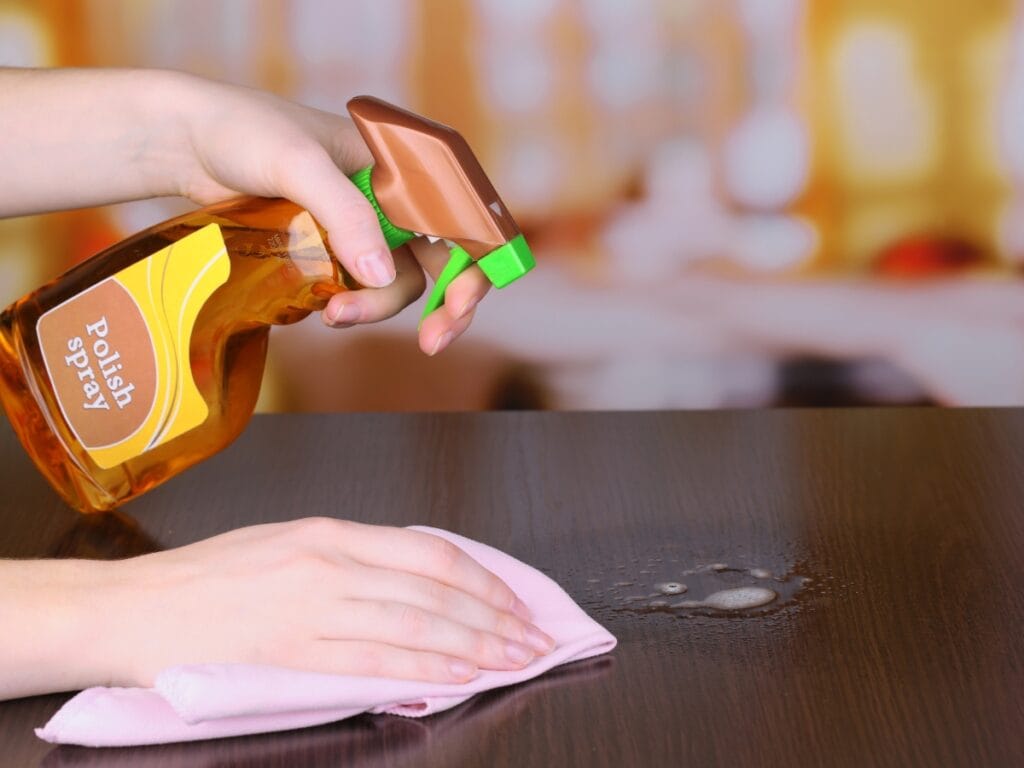
- Polishing is optional, not automatic. If the piece looks dull after dusting and cleaning, a small amount of polish can help refresh the finish. Apply it to the cloth, not directly to the furniture, and keep the layer thin.
- Then buff with a clean, dry cloth until the surface feels dry to the touch. This helps you avoid buildup, which is one of the most common reasons wood surfaces start to look streaky or attract more dust.
If you want to keep maintenance easy, protect the furniture as you go. Use coasters for drinks, place felt pads under decor, and avoid setting hot items directly on the finish. Small habits like these reduce wear far more than any product.
How To Remove Scratches And Restore Wood Furniture Finish
Scratches happen, but the right fix depends on whether you are dealing with a light surface mark or damage that has cut through the finish. Start by cleaning the area gently so you can see the scratch clearly. Sometimes what looks like a scratch is just residue or a scuff that comes off with light cleaning.
For minor scratches that are mostly cosmetic, you can often reduce their appearance by adding a little conditioning and color back into the area.
A common home approach is a small amount of olive oil mixed with diluted vinegar, applied lightly and buffed well. Use it sparingly, since oils can leave residue if overused. Another option is a scratch cover product made for furniture, which can darken the scratch slightly so it blends in better with the surrounding finish.
For deeper scratches, a filler may be the best route. Choose a wood filler or repair putty that matches the color as closely as possible. Apply a small amount, smooth it level, and let it dry fully.
After that, you can sand very lightly, using gentle pressure, then touch up the area with a matching finish. If you are unsure about the finish type, test in a hidden area first. Taking a cautious approach helps prevent creating a larger dull spot around the repair.
If the surface has many scratches or the finish looks uneven in several places, it may be time for a more complete refresh. In that case, focus on cleaning and protecting in the short term, and consider a refinishing plan when you can do it properly, rather than spot-fixing the same areas repeatedly.
When Professional Help Makes Sense For Wood Furniture Care
Sometimes the issue is beyond normal upkeep. If wood surfaces have water damage, cloudy finish patches, deep gouges, or heavy buildup that will not come off with gentle cleaning, a professional may be able to restore the piece more effectively.
This is especially true for antiques or sentimental furniture, where experimenting with strong cleaners or aggressive sanding can lower the value or cause permanent changes.
A professional can help identify the finish, choose compatible products, and use restoration techniques that are hard to replicate at home.
That may include careful deep cleaning, removing old wax buildup, blending scratch repair so it looks natural, or stabilizing areas where the finish has worn thin. In many cases, the benefit is not just the visual result, but also avoiding trial-and-error that can make the damage worse.
Even if you handle routine care yourself, it can be helpful to think of professional restoration as an occasional reset when a piece has reached the point where regular maintenance is no longer enough. With a solid day-to-day routine, most wood surfaces will stay in good shape for years before they ever need that level of attention.
Which Eco-Friendly Products And Practices Enhance Wood Furniture Care?
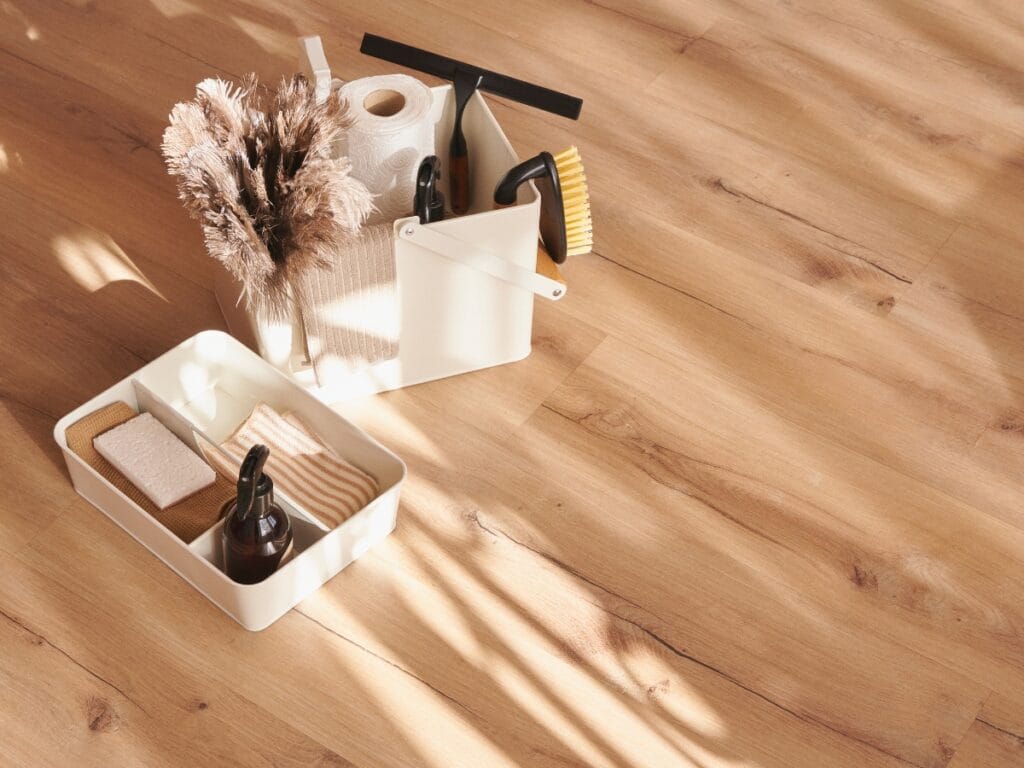
Eco-friendly wood furniture care is less about buying a long list of specialty products and more about choosing gentle materials that do the job without leaving behind harsh residues.
In most homes, the simplest approach is also the most sustainable: remove dust before it scratches, clean with minimal moisture, and use a light protective product only when the finish actually needs it. When you keep those basics in place, wood surfaces stay in better condition, and you naturally avoid the heavy cleaners that can wear down finishes over time.
A good starting point is switching to plant-based cleaners that are formulated for finished wood. Many are designed to cut through fingerprints and everyday film without strong solvents.
What matters most is not the label, but how you use it. Apply cleaner to a cloth rather than spraying directly onto furniture, then wipe with the grain and follow with a dry cloth. This keeps moisture from seeping into seams or edges, which is where swelling and hazy marks tend to start.
Polishes are another area where eco-friendly choices can make a real difference. Instead of silicone-heavy shine products, consider waxes and oils that are meant for furniture finishes.
Beeswax blends and other natural wax polishes can leave a soft sheen and a small amount of protection when applied thinly and buffed well. Natural oils can also help refresh the look of wood surfaces, but they should be used with restraint. Too much oil can leave a film that attracts dust and can become sticky, especially in humid rooms.
Beyond products, the most eco-friendly practice is regular maintenance that prevents bigger problems. Dusting with a microfiber cloth, wiping spills quickly, and avoiding prolonged moisture exposure reduce the need for deep cleaning later.
It also helps to use coasters, placemats, and felt pads under decor, since preventing scuffs and rings is more effective than trying to remove them.
What Are The Advantages Of Using Natural Wood Cleaning Products?
Natural wood cleaning products can be a smart choice for households that want to reduce chemical exposure without sacrificing results. One of the most practical benefits is indoor comfort.
Low-odor, plant-based cleaners are often easier to use in small spaces, and they can be a better fit for homes with children, pets, or anyone sensitive to strong fragrances.
Another advantage is how gentle many natural formulas are on finishes. Strong degreasers and abrasive cleaners can strip or dull protective coatings, which makes furniture look worn faster.
A milder cleaner, paired with good technique, helps you clean effectively while keeping the finish intact. Over time, that adds up to fewer cloudy patches, fewer sticky residues, and a surface that stays easier to maintain.
Natural products can also support more sustainable purchasing habits, especially when you choose concentrated formulas, refill options, or packaging that reduces waste. Even small choices like using reusable cloths instead of disposable wipes help cut down on routine trash while still keeping wood surfaces clean.
How Do Eco-Friendly Solutions Support Long-Term Wood Surface Durability?
Wood lasts longer when you avoid anything that breaks down its finish or leaves buildup behind. Eco-friendly solutions often support durability because they lean toward gentler ingredients and simpler formulas, which reduces the chance of softening, discoloring, or stripping the protective layer on the furniture.
When the finish stays in good shape, the wood underneath is better protected from humidity changes, minor spills, and everyday wear.
Natural waxes and oils can also help in the right context, especially for furniture that looks dry or slightly dull. A thin, well-buffed application can improve the surface feel and reduce the appearance of minor scuffs. The key is moderation and consistency.
Using a little product occasionally, while relying mostly on dusting and light cleaning, protects wood surfaces without creating the layered buildup that causes streaking and attracts grime.
Eco-friendly care also tends to improve overall home air quality simply by reducing the number of harsh, fast-evaporating chemicals used around living spaces. In the long run, the best durability strategy is a steady routine: gentle cleaning, minimal moisture, and small protective habits that keep the finish from taking unnecessary hits.
How Can Commercial Spaces Maintain Wood Surfaces Effectively?
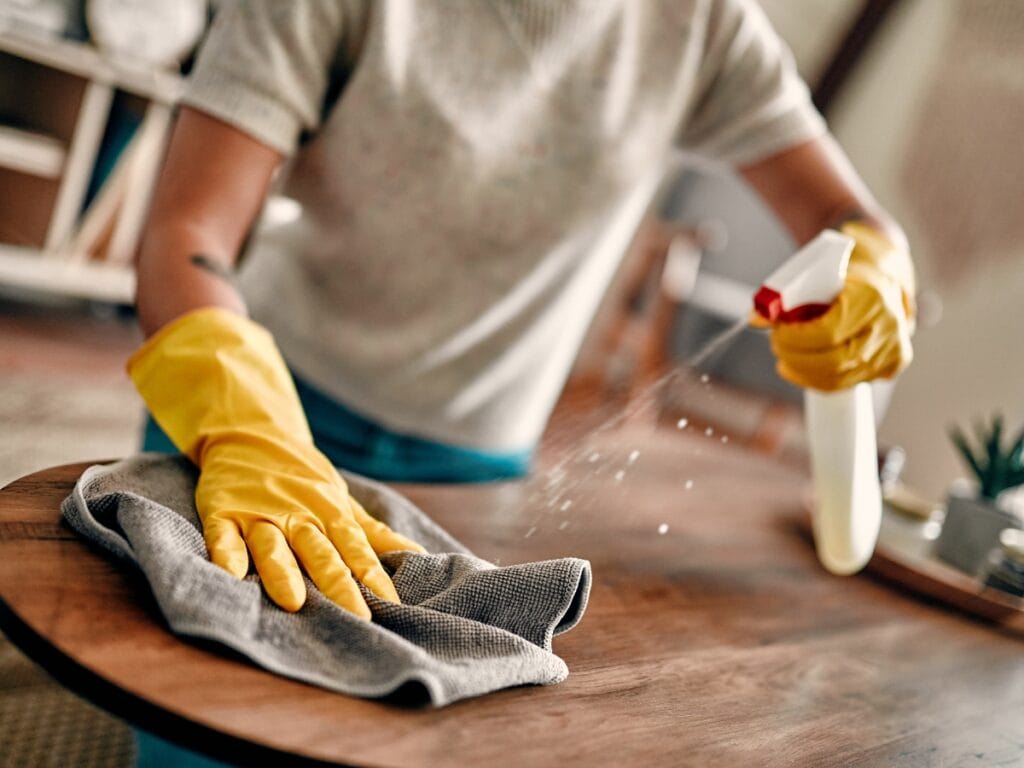
Commercial spaces tend to be harder on furniture and fixtures than homes. Wood surfaces in offices, restaurants, retail spaces, and lobbies deal with constant touch, frequent cleaning, shifting humidity from HVAC systems, and the occasional spill that does not get noticed right away.
The best results usually come from a simple, consistent plan that prioritizes light daily care, scheduled deeper cleaning, and a few practical protections that reduce wear.
A regular cleaning schedule is the foundation. Dust and grit should be removed often because they act like sandpaper when people slide items across tables or counters. For day-to-day upkeep, a microfiber cloth and a gentle cleaner used sparingly are typically enough. The key is controlling moisture.
Cleaning teams should avoid soaking cloths or leaving wet spots to air-dry, since standing water can create rings, haze, or swelling along seams. When cleaning is done correctly, wood surfaces keep a more even look and do not require heavy polishing to appear presentable.
Protection matters just as much as cleaning. Coasters, desk pads, mats at service counters, and felt pads under display items reduce the scuffs and scratches that build up quickly in high-traffic environments.
It also helps to set clear expectations for staff, such as wiping spills immediately and avoiding harsh all-purpose sprays that can dull finishes over time. When everyone follows the same care routine, the surface condition stays more predictable and easier to manage.
What Specialized Cleaning Services Are Available For Commercial Wood Surfaces?
Some businesses rely on in-house teams for routine upkeep and bring in specialists for deeper care. That deeper care can be useful when wood surfaces start to look dull, sticky, or uneven from product buildup, or when high-use areas show visible wear.
Deep cleaning typically focuses on removing grime and residue without stripping the finish. This is especially helpful for pieces that have been cleaned with mixed products over time, which can leave a cloudy film. A deeper clean can reset the look of the finish so the surface reflects light more evenly and does not collect dust as quickly.
Professional polishing can also be part of a maintenance plan, but it should be used carefully. Polishing is most effective when it is occasional and controlled, not frequent and heavy.
The goal is to refresh and protect, not to create layers. In commercial settings, that often means polishing only the surfaces that truly need it, such as reception desks, conference tables, or restaurant host stands.
Restoration is another category entirely. If wood surfaces have deep scratches, worn-through finish spots, water damage, or chips along edges, restoration work may include repair and refinishing steps to bring the surface back to a usable condition. This is typically scheduled less often, but it can extend the life of higher-quality furniture and reduce replacement costs.
How To Schedule Wood Surface Maintenance For Businesses
Scheduling works best when it matches how the space is used. A restaurant, for example, may need more frequent attention on tabletops than a low-traffic office needs on conference room furniture.
Start by identifying the highest-contact items and the areas most exposed to spills, sunlight, or heavy cleaning. Then build a plan around realistic intervals, with light daily cleaning, periodic detail cleaning, and occasional polishing or restoration as needed.
Timing matters. Many businesses schedule deeper cleaning after hours to avoid interrupting customers or staff. It is also smart to plan around busy seasons. If your space has predictable peaks, you can do a deeper refresh right before that period to keep wood surfaces looking consistent when foot traffic increases.
When you bring in outside help, the most useful conversations focus on specifics: what types of finishes you have, what problems you are seeing, what products have been used, and which surfaces matter most for appearance. A clear scope prevents over-treatment and helps ensure the finish stays intact.
Product Choices That Support Routine Care
For daily upkeep, plant-based or mild cleaners tend to be easier on finishes and less likely to leave harsh residues, as long as they are used with a well-wrung cloth and followed by drying.
For occasional shine and protection, a polish that is compatible with the existing finish can help, but it should be applied thinly and buffed well to avoid buildup. Eco-friendly products can be a good fit for shared spaces because they often reduce strong odors and lower chemical exposure during routine cleaning.
Conclusion
Preserving the natural beauty of your wood surfaces and furniture requires the right techniques and a gentle touch to avoid damage while achieving a lasting shine.
With proper dusting, appropriate cleaners, and timely care, your wood pieces can remain stunning focal points in your home for generations.
For a comprehensive deep clean that extends beyond wood care to every corner of your home, trust the cleaning professionals at Magic Cleaning Pros. Ready to enjoy a spotless, beautifully maintained home? Call 678-515-5820 or visit our website for a free quote today. Let us provide the expert care your home deserves.